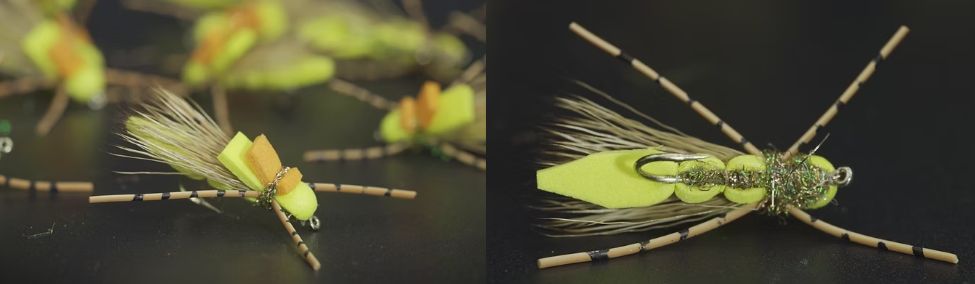
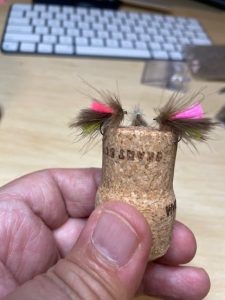
Please join John who will be hosting the tying of the GFA Foam Hopper. This is a great all-around attractor pattern in late summer when larger terrestrials are out. This is a great searching pattern with a dropper underneath. It’s also very buoyant allowing for heavier droppers to be used.
Ingredients:
Hook: 2 or 3 X-long hopper hook – Sizes 6-14 Thread: UTC 140 Denier – Tan (or equivalent to suit the foam colour) Underbody: Dubbing Body: Craft Foam, 2-3mm – Tan/Yellow Wing: Elk hair, cleaned and stacked Hot Spot: Bright Craft Foam or other indicator material – 2mm Legs: Striped round-rubber legs – Medium
Blue Collared Pheasant Tail Nymph (aka The Blue Ninja)
Hook: Dohiku HDJ in size 14, 16 and 18 or your preferred jig nymph hook
Bead: Copper coloured tungsten bead. Normally go 3.5mm on sz 14, 3.0mm on sz 16 and so on. But it also works well sizing up the bead on a smaller hook eg 3.5mm bead on sz 16 hook, 3.0mm bead on sz 18 and so on.
Tail: Coq de Leon (CDL) preferably in Ginger Speckle, but any CDL will do
Rib: Copper wire in size 0.2mm or UTC Brassy size
Collar: Uni mylar 1/32” in Holo lt Blue, alternatives Semperfli Holographic Tinsel 1/32” in Kingfisher colour, or Wapsi/UTC Holo Tinsel medium in blue
Resin: Solarez UV bone dry thin or your preferred thin, clear UV resin
Initially saw a clip on dubbing loops which popped in my YouTube feed https://youtu.be/1LonbwRq8kM?feature=shared Some good hacks. I couldn’t work out what was happening at 4:00 but it is simply that instead of spinning with loop vertical, he drapes it over his finger so the part of the loop with material comes off the shank horizontal but then turns vertical to the spinner. If you go to https://youtube.com/@flyfishfood?feature=shared and go to playlists you can go through each clip of skill builders.
Here someone has used AI to take the mickey out of Cheech and discuss the reason we fly fish 😊 “the podcast where we pretend standing in freezing water at 5AM makes us outdoorsmen” – out of the mouth of babes it seems. https://www.instagram.com/reel/DKaQWvES88w/
Tips and tricks. The idea here is all our experienced tiers would come prepared to describe and demonstrate a tip or trick that they have learnt over the years. We’d also demonstrate some of the basic skills of fly tying. Members who have not participated in fly tying, thinking it is all too advanced, might care to come along and see the principles.
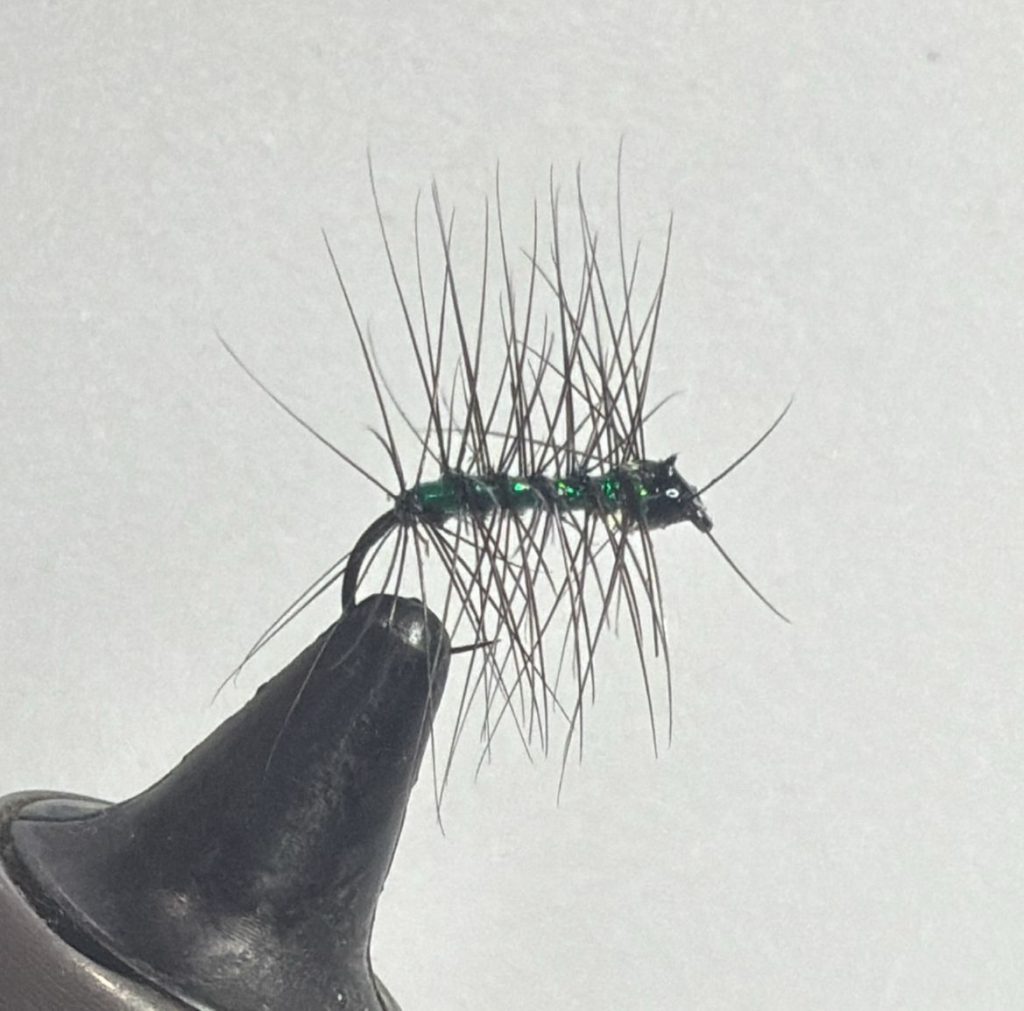
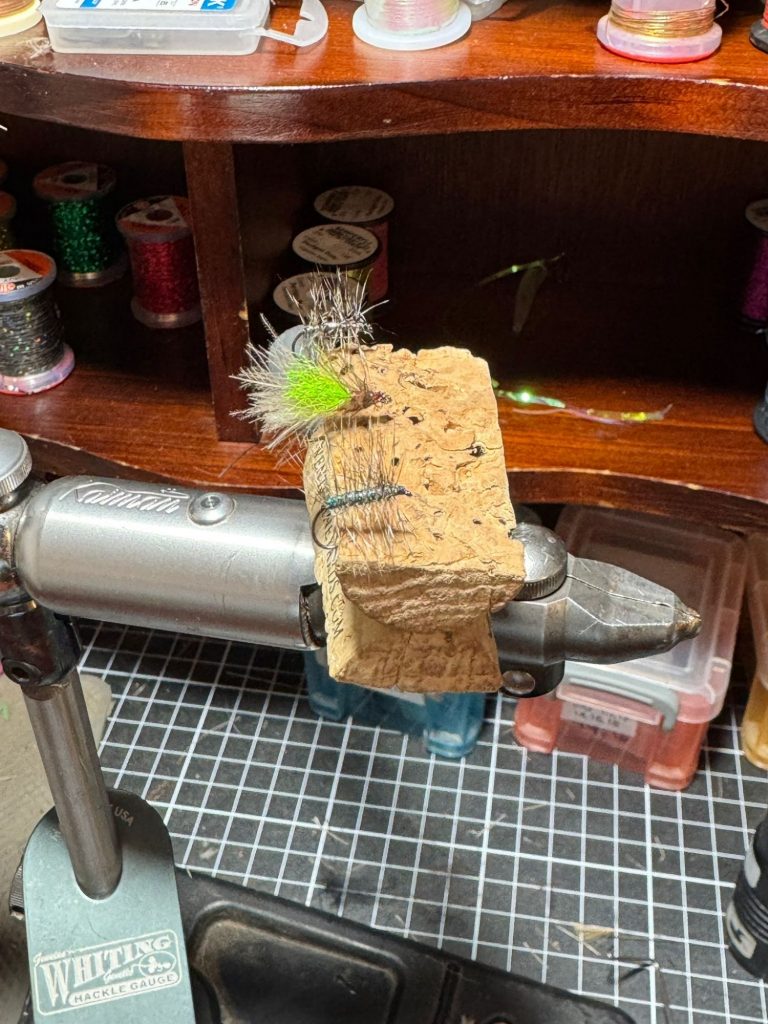
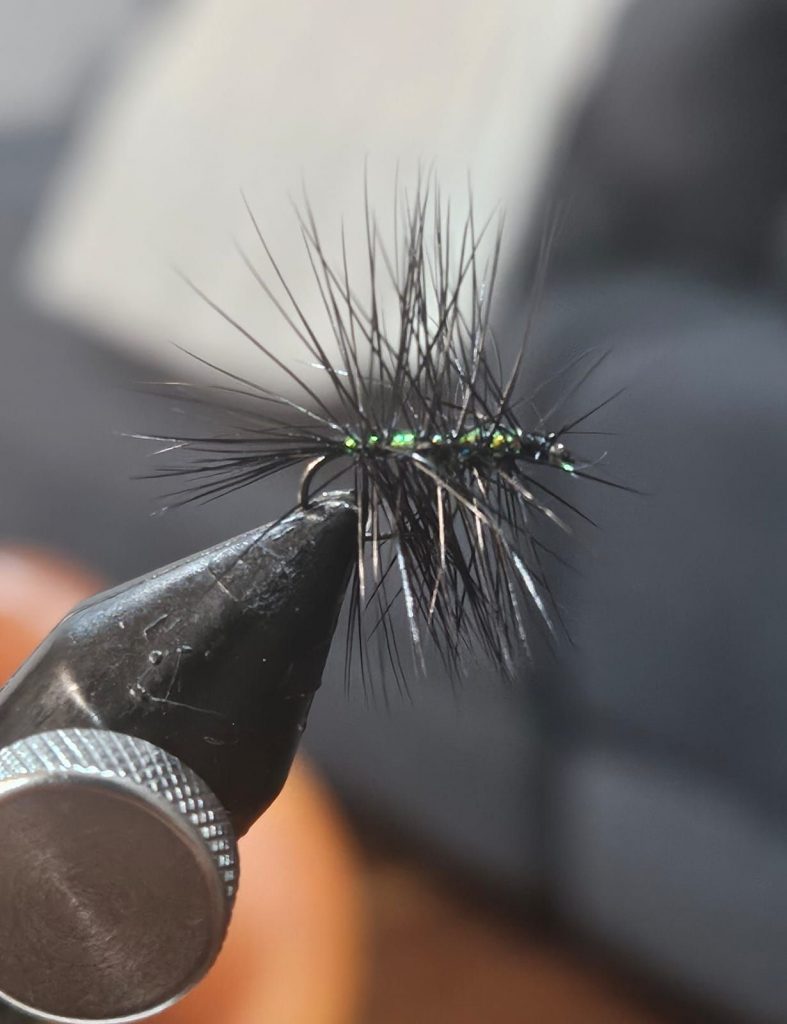
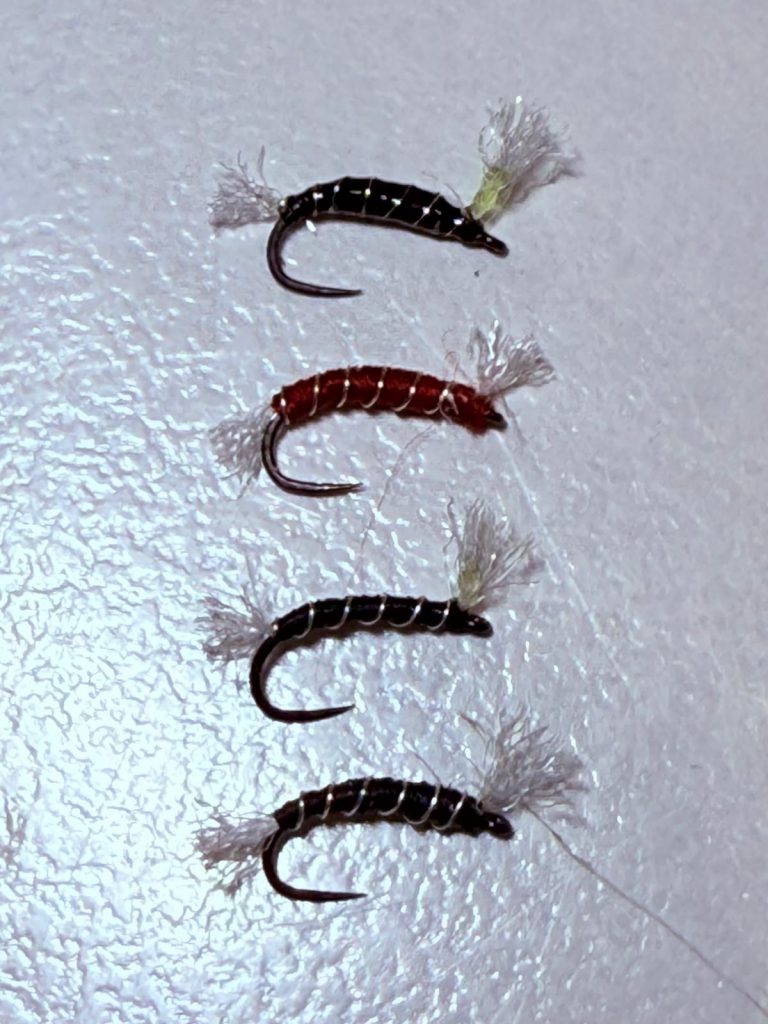
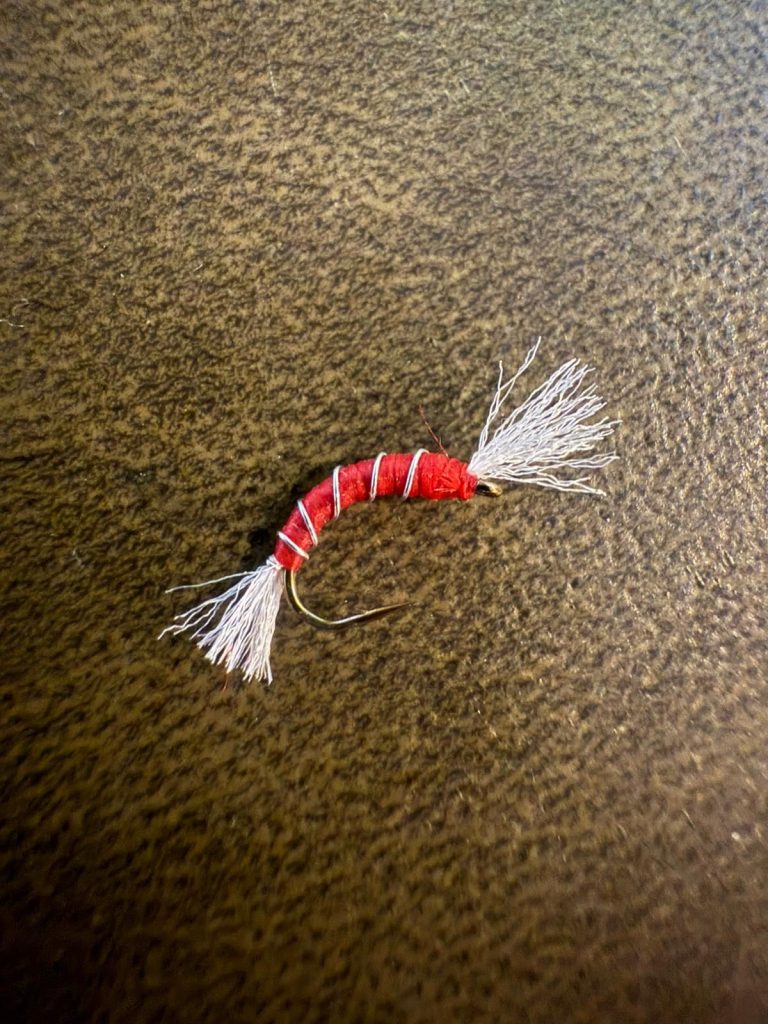
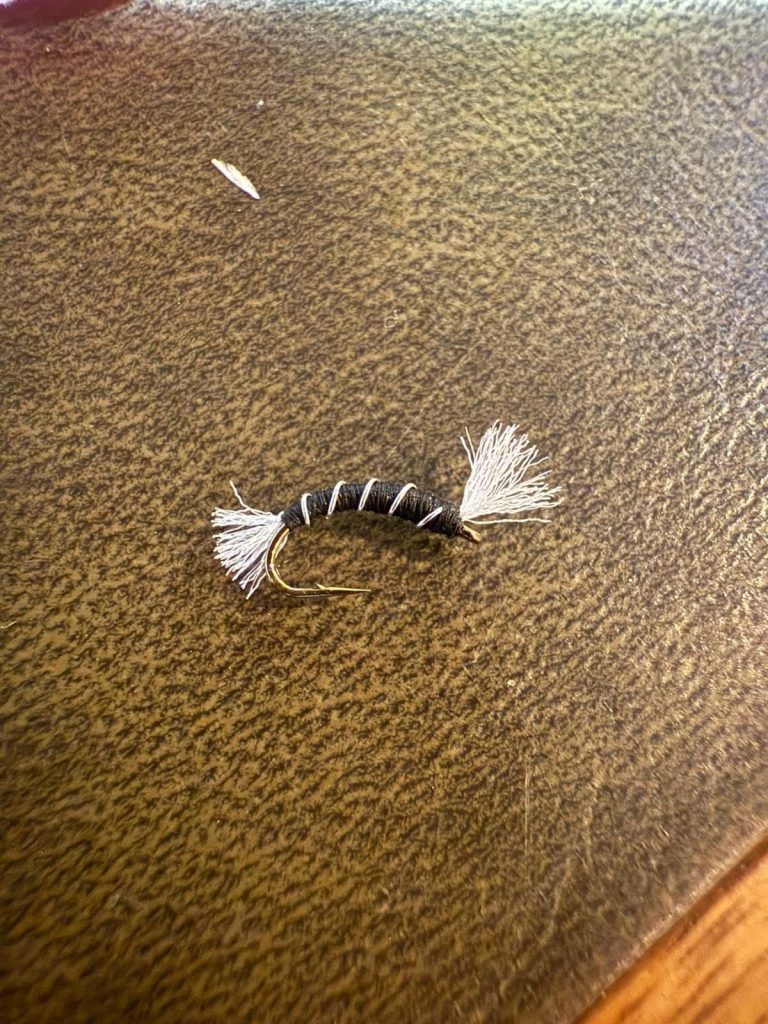
This month will be more about a technique rather than a particular tie. In the US it seems to be known as ‘hackle stacker’ whereas in UK it is known as ‘paraloop’. We’ll explore the effect together. You can choose to follow one of the patterns offered here, or make something up yourself.
Here are some examples where the central idea is implemented slightly differently:
This fly seems overly complex with the wing and tail, but it shows really clearly the way to hold the loop in the absence of a gallows. https://youtu.be/E9HTjiQBEy8?feature=shared
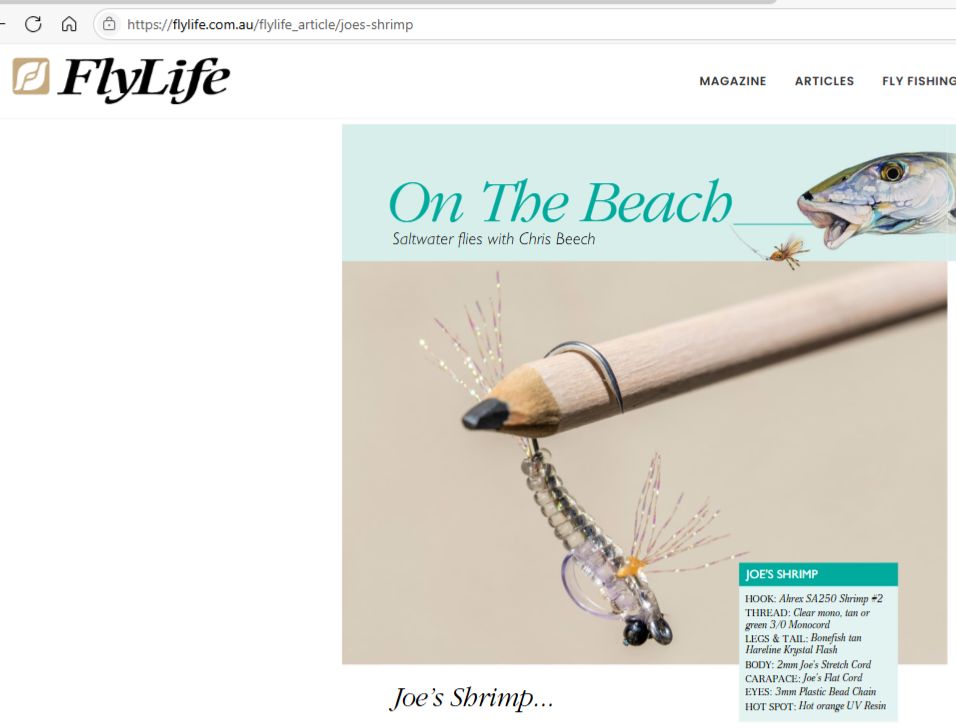
We were lucky to have the ‘Joe’ from the fly name come along and show us all the tricks. Fuller report in July 2025 Newsletter, but here are some of the results.
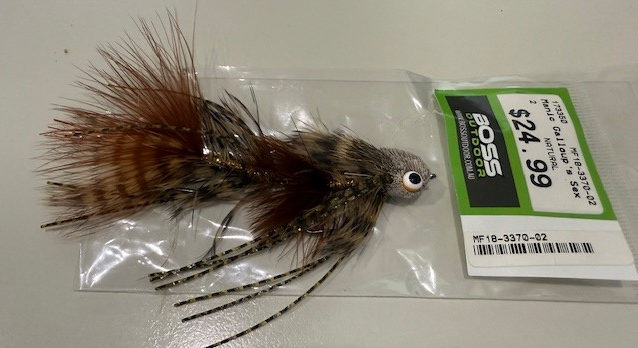
Claude led the May tie for Kelly Galloup’s Sex Dungeon fly. There are a number of YouTube videos showing the tie, including by Galloup, but warning you they are very long.
The sex dungeon is the pinnacle of what many articulated flies strive to be. Meaty enough to drive fish crazy, yet simple enough to exhibit a natural, unencumbered swim, the sex dungeon capitalizes on its versatility, and ability to elicit reactionary, as well as predatory strikes from stubborn underwater monsters.
Something great about large streamers such as the sex dungeon is the fact that it’s in no way limited to a single colour. While fishing white and tan versions of the fly can be a great way to bring in fish on a sunny day, darker patterns such as black, purple, and brown are also highly effective. In deeper water, feel free to get creative and throw some bright green or yellow patterns in order to spark the curiosity of hunkered down fish. For small creeks and rivers, feel free to tie on an olive, or earthy toned sex dungeon in order to imitate sculpin, crayfish, or even larger baitfish. For tiers, this can be a tricky project, however, once you get the hang of it, it becomes one of the most fun flies one can tie.
An articulated, double hooked, dumbbell eyed, marabou, flash, silicone legged, schlappen and spun deer hair creation that not only moves like crazy when trout can see it in clear water but it also “pushes” water (thanks to that deer hair head/collar) so that in dirty water the trout can also “feel’ it. This fly casts a very sculpin-like profile and is most commonly fished on a sinking tip line and fished around river structure and pulled off the banks/drop offs when looking for a meat eating trout.
It would be a fly that could be swung or stripped like a bugger – good for trout and natives – probably saltwater if you used stainless hooks. I’ve seen some great videos of large trout being caught in NZ and Nathan believes they would be great during spawn run.
Ingredients:
Rear Hook: Daiichi 2460 #2 Tail: Natural colour Flash in Tail: Silver Flashabou Body: Pearl Ice Dub or UV Minnow Belly Hackle: Natural Schlappen Rib: UTC Ultra Wire (Brassie Silver) Legs: White/Pearl Flake Barred Crazy Legs Optional Wing: Natural Marabou Connection: AFW Surflon Micro Ultra Wire-19 Strand w/ 1 red bead
Front Hook: Daiichi 2460 #1/0 Skirt: Natural Marabou and Silver Flashabou Body: Pearl Ice Dub or UV Minnow Belly Hackle: Schlappen Rib: UTC Ultra Wire (Brassie Silver) Legs: White/Pearl Flake Barred Crazy Legs Optional Wing: Marabou Eyes: Large Double Pupil Lead Eyes (Red/White/Black) Head/Collar: Deer Belly Hair
Lachy is the lead and suggested two flies as he feels they are pretty quick. Various reasons led to cancellation and may come back another time.
His notes:
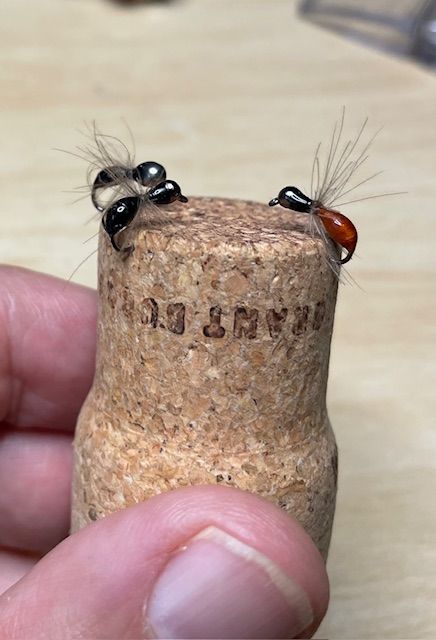
Sunken Ant Hook: Dohiku 644 / Hanak 300 series / or Hanak 450 in size 14 and 16 Bead: Black nickel tungsten 2.5mm (for sz 14 hook) and 2.0mm (for sz 16) Thread: Black 70 Denier 8/0 and Rusty Brown Uni-thread (for the brown ant version) CDC: Brown or natural UV Resin – thin
Corn Fed Caddis Hook: Tiemco TMC 100/103 BL or Hanak H130 in size 12 or 14 Thread: Brown or olive 70 Denier 8/0 Shuck: Antron yarn/thread in olive or brown Body: Tan dubbing – preferably dry fly / fine synthetic type dubbing Wing: CDC in natural or slate dun Post: Antron in white or preferred hi-viz colour
Folks will probably have most materials, apart from maybe the Olive Antron yarn. I have plenty and am happy to bring it along to the next meeting if folks need some, just ask them to drop me a line via the tying WhatsApp group if anyone needs any of the materials.